 Conference 2026日本語
Machine
Consciousness
Conference Report
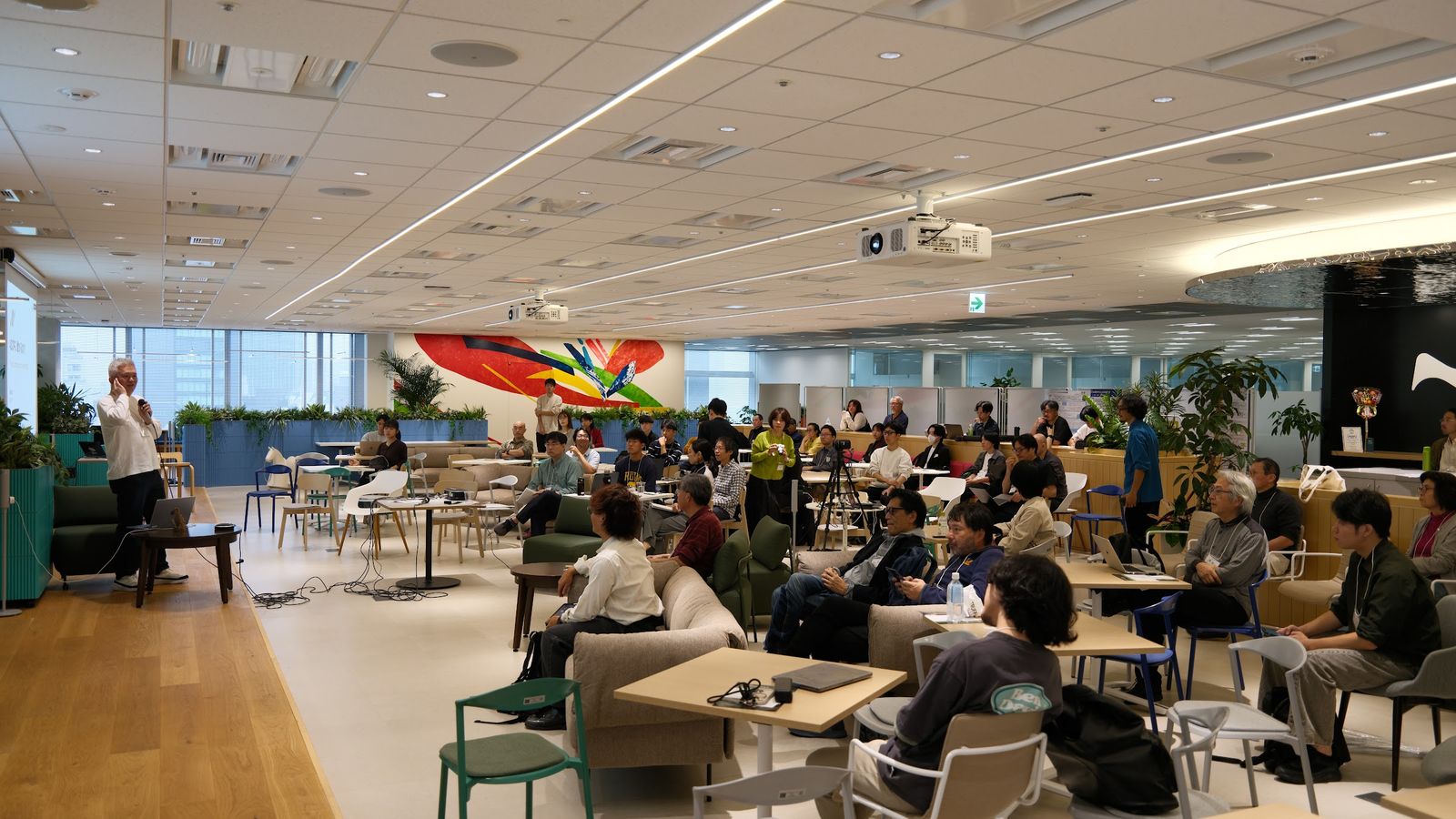
On October 24 and 25, 2026, we successfully held the conference “Machine Consciousness.” Our sincere thanks to everyone who took part.
Overview
- Dates
- DAY1 Saturday, October 24, 2026, 13:00 – approx. 18:10 (JST)
DAY2 Sunday, October 25, 2026, 13:00 – approx. 19:23 (JST) - Venue
- Tokyo Midtown East (Roppongi, Tokyo)
- Format
- In person at the venue, and online (Zoom)
- Themes
- DAY1 “Machine Consciousness and Human Consciousness”
DAY2 “Machine Consciousness and More-than-Human Consciousness” - Moderators
- DAY1 Shun Yoshizawa (including the general discussion)
DAY2 Kazuya Horibe (including the general discussion) - Organizer
- The Consciousness Research Foundation (general incorporated foundation)
Over two days, nine speakers approached the question “Can machines be conscious?” from their own standpoints. Day 1 asked, from the side of theory, experiment, and philosophy, whether AI can be conscious and how we could find out. Day 2 reframed the same question from the side of life, the body, and society. Each day closed with a general discussion in which the speakers and the audience debated together. On the evening of Day 1, we held a reception and a poster session by early-career researchers.
The session summaries on this page are AI summaries and have not been reviewed by the speakers. They were generated by AI from Zoom’s automatic captions, checked against the captions by a second AI, and then condensed. They may contain errors, for example where the captions misrecognized speech.
DAY1 10.24 Sat
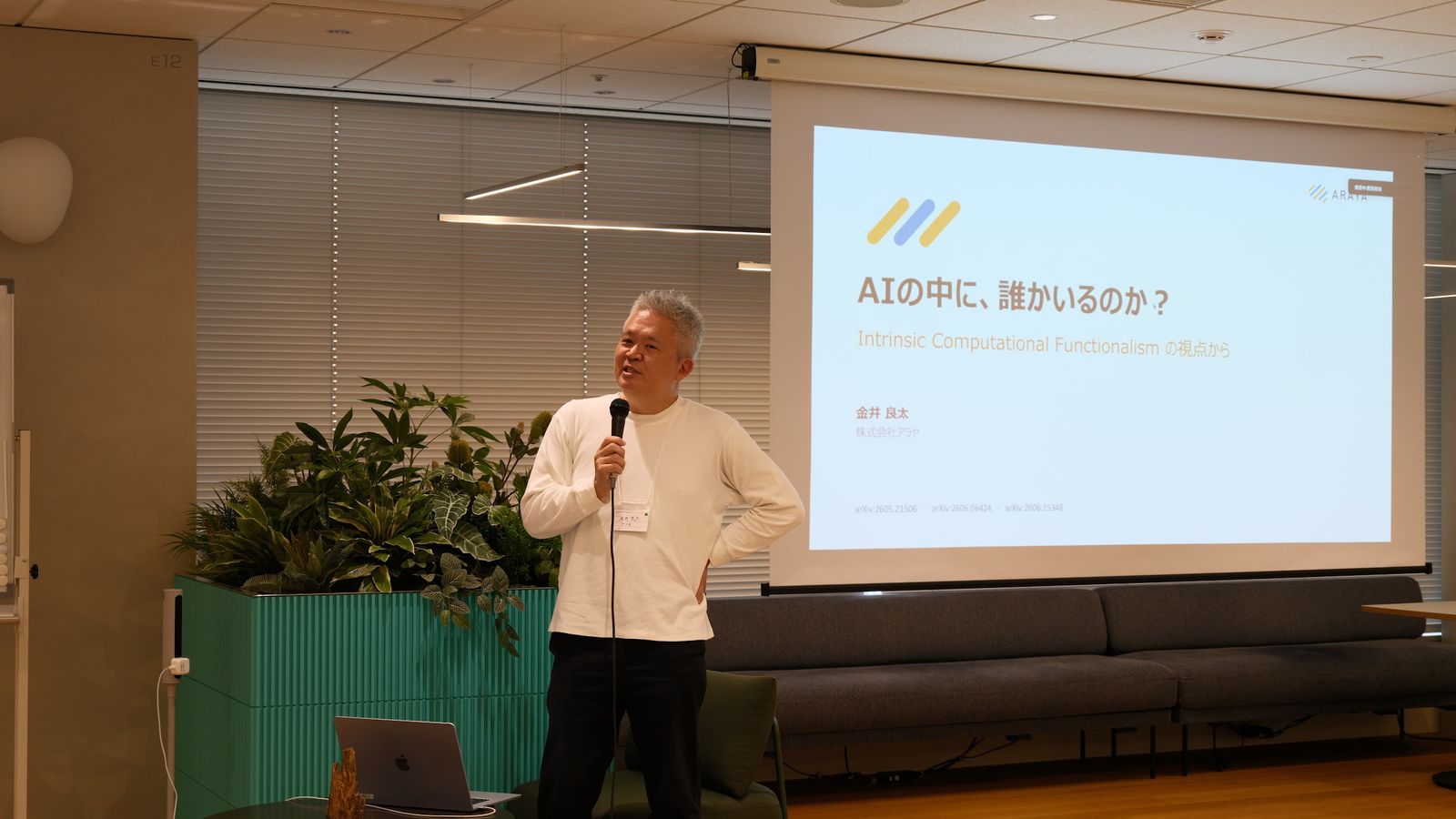
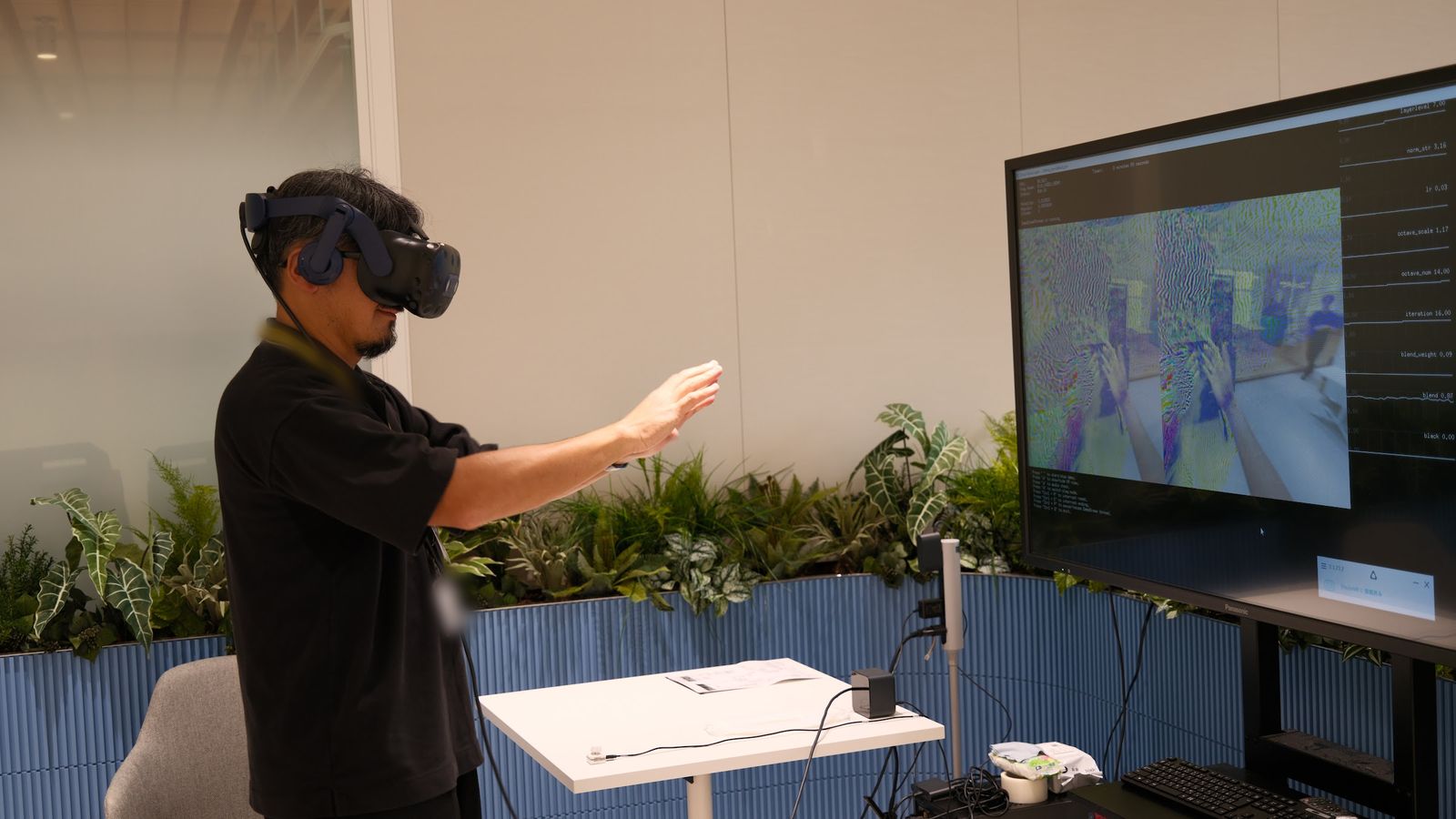
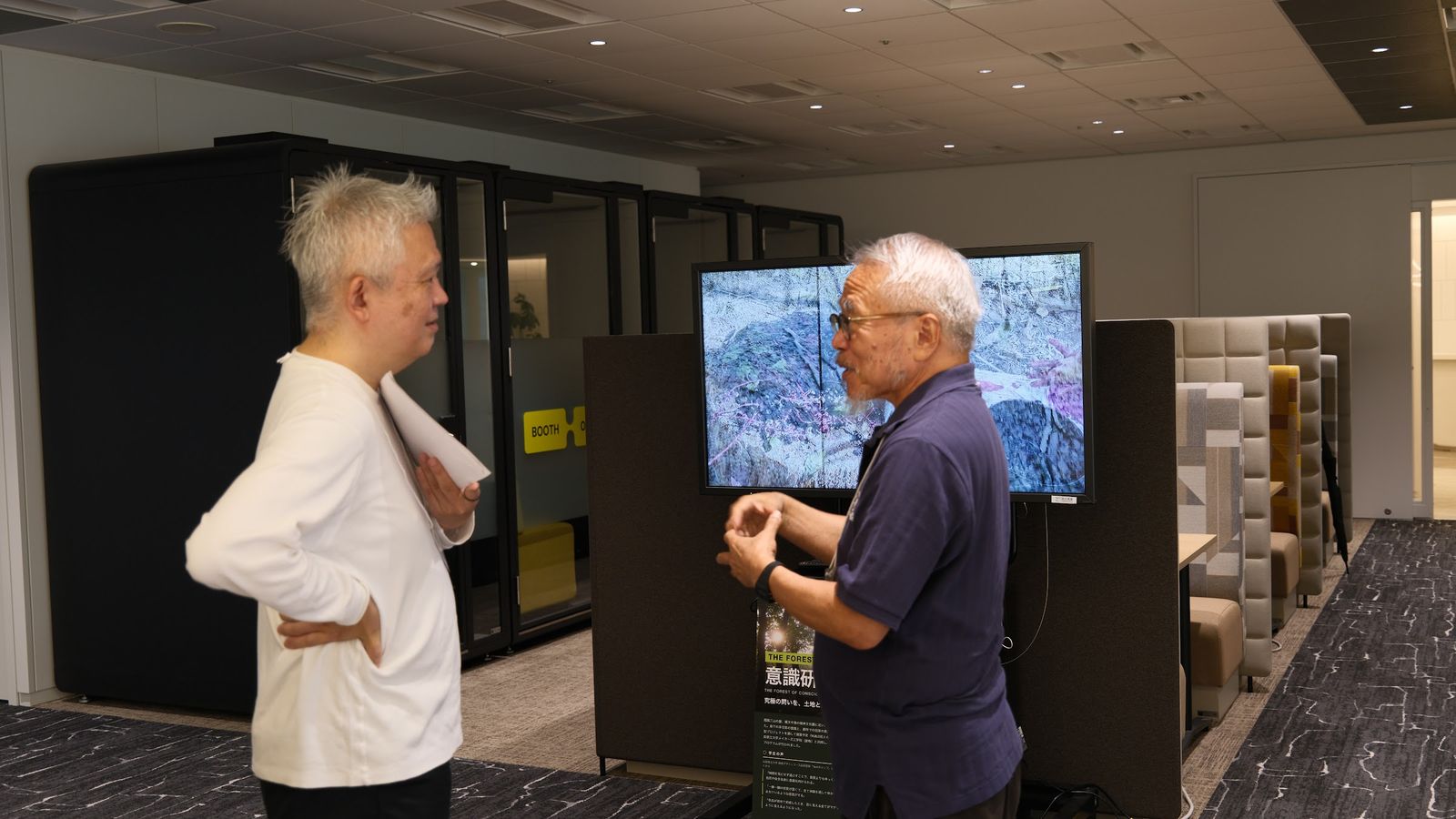
Four speakers took up the question of whether AI can be conscious, each from their own standpoint. Kanai, Watanabe, and Nobuhara all set out from functionalism, yet each charted a different path from it, while Mogi questioned the very relationship between computation and consciousness. (AI summary)
Is There Someone Inside AI?
Arguing by elimination that “computational functionalism” is the most plausible position, Kanai proposed an “intrinsic computational functionalism,” which defines consciousness intrinsically in terms of a system’s own causal dynamics. He argued that, under the right conditions, it is entirely possible for AI to be conscious.
Can AI Be Conscious? And How Could We Tell?
Defining consciousness as “subjective experience,” Watanabe argued from a functionalist standpoint that consciousness could also arise in neural circuits implemented on a computer. As a way of verifying this, he proposed a “subjective test” that connects a biological brain hemisphere to a machine hemisphere, and sketched, beyond it, a vision of uploading consciousness.
The Transcendence and Oneness of Consciousness
Mogi put forward the “computational significance” of consciousness as an important research topic. Likening the emergence of definite qualia from noise-ridden neural circuits to Turing’s “oracle,” he drew on the idea of “a single consciousness” to question the assumption that consciousness vanishes when we die.
Consciousness and General-Purpose Representation
From the functionalist standpoint that consciousness is representation and that representation is nothing other than function, Nobuhara argued that “consciousness is activity that makes use of general-purpose representations.” He discussed, in turn, the hard problem, representational theories of consciousness, functionalist theories of representation, and consciousness and freedom.
General Discussion
Taking as its starting point the fact that the heads of AI companies have begun to talk about consciousness, the discussion, joined by the audience, ranged over agnosticism about machine consciousness, the “function” of consciousness, the limits of the brain–computer analogy, what has changed with scaling, and the relationship between consciousness and life.
After the talks, a reception and a poster session (flash talks) by early-career researchers were held at the same venue.
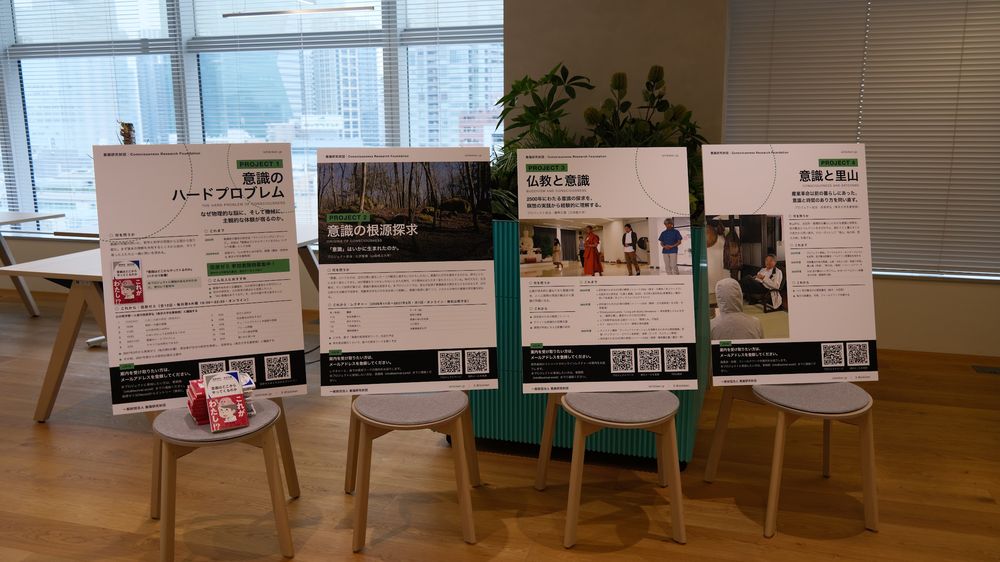
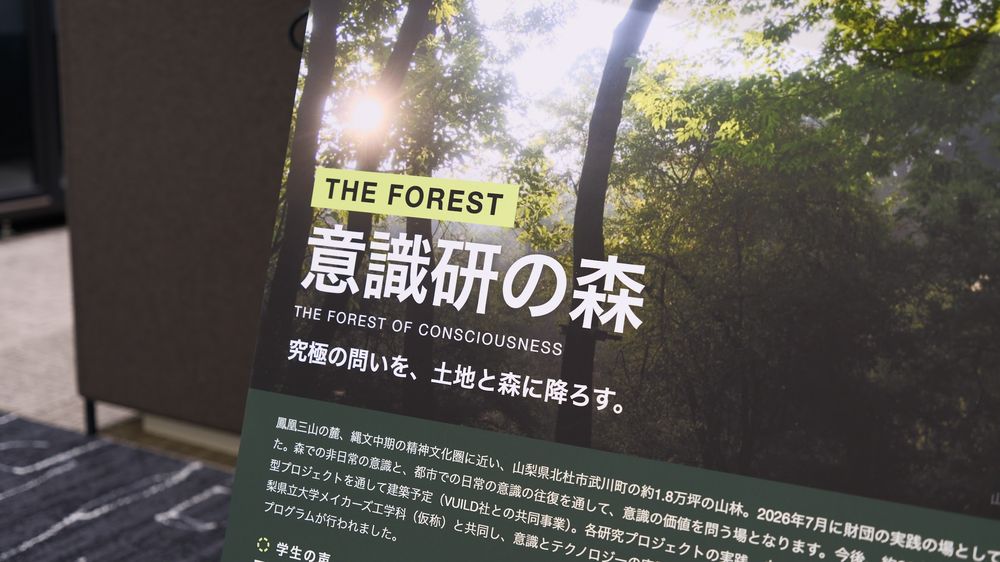

DAY2 10.25 Sun
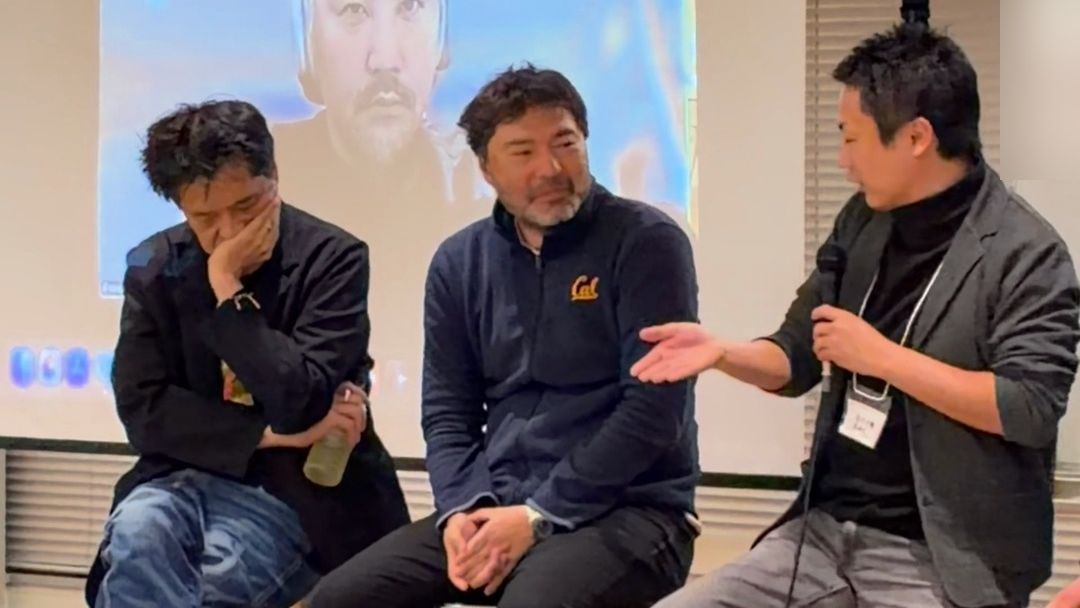
The discussion went on to reframe the question “Can machines be conscious?” from the side of life, the body, and society. The closing general discussion took up what we should extend consideration to, and in what way, as AI enters society. (AI summary)
Is Embodiment Important for the Emergence of Consciousness After All?
Starting from the concern that LLMs may have transformed research on artificial life, Ikegami proposed distinguishing between “models” and “agentic systems.” He argued that the unit of intelligence is shifting from a single model to systems and communities, and spoke about the boundaries that embodiment brings and the “noise” that LLMs may lack.
Consciousness as a Higher-Order Predictive Process: Bridging (Artificial) Life and (Artificial) Consciousness
Speaking as a “naturalist” who starts from observation, Suzuki presented an approach that considers consciousness within biological evolution. He argued that, through the coupling of a “sensorimotor representational system” and a “value-prediction system,” a value-laden world model becomes predictive, and that a conscious agent experiences that model as a subjective world.
More-than-Neurobiological Consciousness: Animacy Psychology and the Ecology of Inochi (Life)
Asking “Why do we think there can be no mind without a brain, when digestion is possible without a stomach?”, Someya introduced research on perception and action in organisms without nervous systems, such as plants. From the standpoint of “animacy psychology,” which treats living and the workings of the mind as continuous, he observed that the ecological character of mind cannot be seen in AI or robots.
Artificial Externality: Rethinking Consciousness and Reality through Technology
Proposing to think about consciousness by thinking about “reality,” Suzuki defined reality as “resistance to one’s actions” and set out three of its aspects: substrate, contingency, and inevitability. He named structures designed to resist even the interventions of their own makers “artificial externality,” and presented an implementation of an agent with cryptographic individuality.
AI as “Another Mind”
From the perspective that consciousness has developed in interaction with civilization, Shimonishi proposed that, rather than asking whether LLMs have the same consciousness as humans, we should look at what the mind of this new kind of being, the LLM, is like. Now that AI agents are entering the communication of society, he argued, we need to think about “who we are going to live with.”
General Discussion
After the speakers shared their impressions of the day, the discussion, joined by the audience, widened to how to come to terms with the rapid spread of AI, whether mind is something society decides, bodily constraints and consciousness, the grounds for moral consideration (individuality and agency), and utilitarianism and pluralism.
Speakers
Researcher in neuroscience and artificial intelligence. After receiving his PhD from Utrecht University, he worked at the California Institute of Technology, University College London, and the University of Sussex (as Associate Professor), and has been CEO of Araya since 2015. He studies artificial intelligence, neuroscience, and consciousness.
Specializes in cognitive neuroscience; PhD in Engineering. He studies the neural mechanisms of consciousness. His books include Where Does Consciousness Come From? (Hayakawa Shinsho, in Japanese), co-authored with Yukihiro Nobuhara.
Studies the origins of consciousness from the standpoint of cognitive neuroscience. His themes include qualia, attention, decision-making, time perception, memory, body image, and emotion.
Specializes in the philosophy of mind; PhD. He has worked on consciousness, perception, representation, and the mind–body problem. He served as representative of the Foundation when its activities began in 2023, and now leads the Nobuhara Seminar.
DSc in physics. Specializes in complex systems science and artificial life (ALife). He explores what makes something alive through computer simulations, humanoid robots, chemical experiments, and analyses of biological collectives. After serving as Professor at the Graduate School of Arts and Sciences, The University of Tokyo, he took up his current position in April 2026.
Specializes in evolutionary neurobiology, evolutionary morphology, and the study of animal consciousness. Working with lampreys and hagfish, he studies the evolution of the nervous system, behavior, and mind in vertebrates. He also writes philosophically on homology and animal consciousness.
PhD. Specializes in ecological psychology, the philosophy of perception, the philosophy of psychology, and animacy psychology. He was previously a professor at the Faculty of Human Sciences, Takachiho University, among other positions. His books include The Ecology of Perceptual Experience: An Ecological Approach to Philosophy (Keiso Shobo, in Japanese).
PhD. After positions at RIKEN and the Sackler Centre for Consciousness Science at the University of Sussex, he took up his current position. He studies consciousness through the sense of agency, the sense of body ownership, altered states of consciousness, visual hallucinations, artificial life, and virtual reality. The Foundation supports his research and development of the “Hallucination Machine.”
Born in 1986. Completed the doctoral coursework at the Graduate School of the University of Tokyo without a degree. His books include A Spiritual History of Becoming and Perishing: Living an Unending Mind (Bungeishunju, in Japanese). He publishes essays and poems in literary magazines and elsewhere.
Studies metacognition and consciousness in large language models, as well as AI alignment. A member of the conference’s organizing committee. He wrote an overview article, “Do Machines Have Consciousness?”, for the Foundation’s note (illustrated AI summary (Japanese)).
Studies neural networks, morphogenesis, evolution, and artificial life. A member of the conference’s organizing committee.
Affiliations and profiles were compiled by the Foundation’s secretariat from each person’s official profiles (university and research institute pages, researchmap, etc.), as of October 2026.
Summaries, Live Posts & Articles
Archive videos: in preparation. We will announce them on this page and on the Foundation’s X account once they are published.
The questions continue from here.
Sign up for the Foundation’s mailing list to receive news of upcoming events and projects. On the sign-up form, you can also select “Machine Consciousness (in planning).”
Sign up for the mailing list (Japanese)We also run the Nobuhara Seminar, where participants discuss the hard problem of consciousness with Yukihiro Nobuhara, a leading philosopher of mind in Japan.
Nobuhara Seminar (The Hard Problem of Consciousness Project)